San Rinieru Romanesque Chapel
San Rinieru Romanesque Chapel
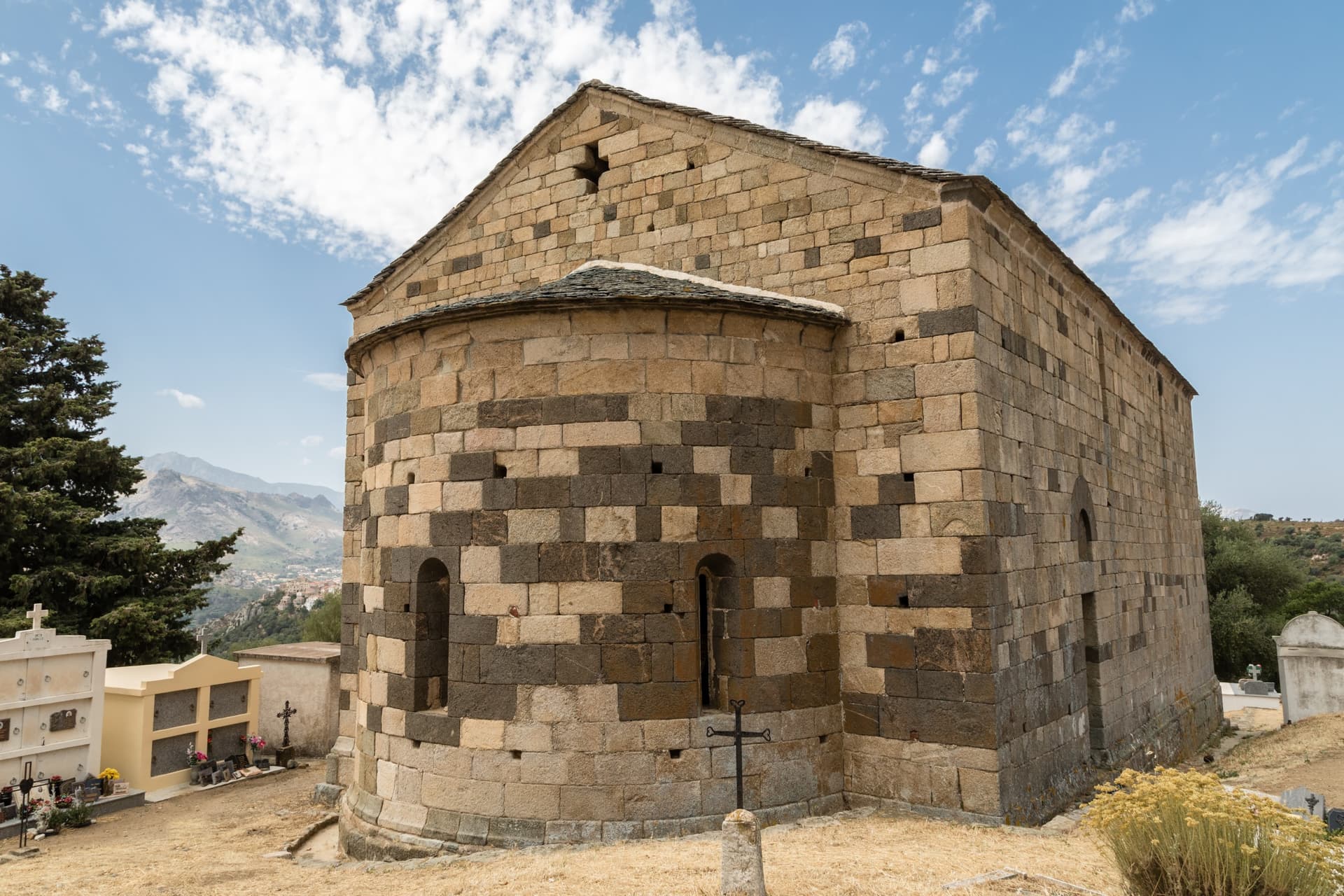
12th-century Romanesque chapel perched at 415 m altitude in Montegrosso, Balagne. Polychrome pink granite, Corsican Pisan style, listed as a historic monument in 1930.
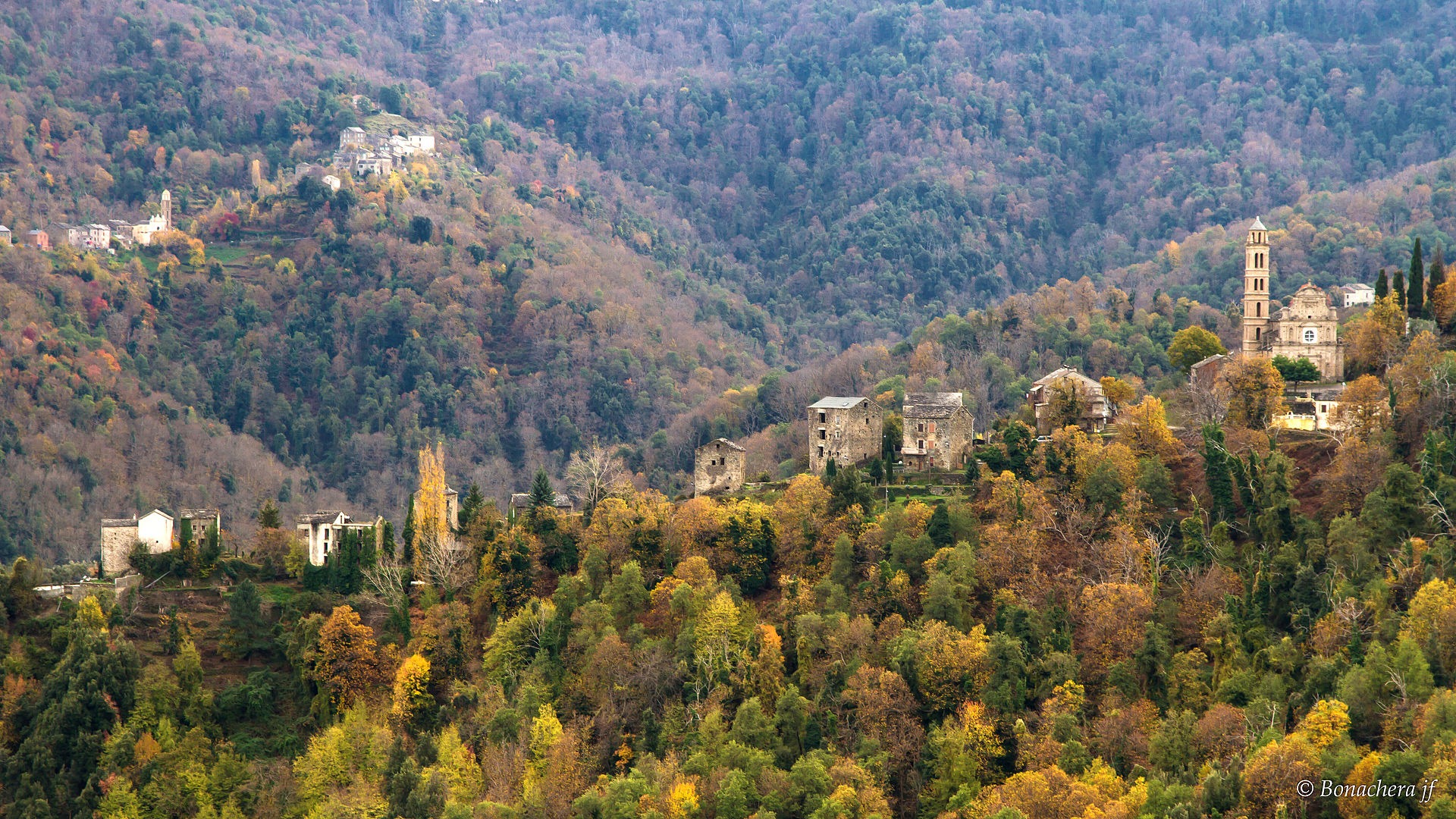
The San Rinieru Romanesque chapel stands at 415 metres altitude on the southern slope of Capu di Bestia, in the municipality of Montegrosso, Balagne. Built around the 12th century in polychrome pink granite, this small rural church in Corsican Pisan Romanesque style is listed as a historic monument by decree of 15 May 1930. Isolated in the middle of a cemetery, it remains one of the best-preserved witnesses to island Romanesque art.
Why visit San Rinieru
The site's appeal rests on several elements rarely found together in a rural chapel:
- Corsican Pisan Romanesque architecture in polychrome pink granite, remarkably homogeneous;
- a panoramic position over Balagne, facing towards the Church of Sainte-Restitude in Calenzana;
- a preserved rural setting, away from villages, accessible via a short path from Lunghignano;
- a living tradition surrounding the patron saint Saint Rainier, celebrated each 17 June.
The visit is primarily outdoors: the interior opens only on the feast day or for occasional ceremonies. Plan 30 minutes to 1 hour on site, longer if you extend your stay with a walk through neighbouring hamlets.
A history rooted in Balagne
The chapel is believed to have been built around the 12th century, at a time when Balagne was dotted with religious buildings inspired by Pisan style. Its location long sparked debate: built on the territory of Lunghignano municipality, it fell under Montemaggiore's jurisdiction. Lunghignano residents would have preferred to see it erected lower down, near the present-day Church of Saint-Vitus.
Local tradition recounts that in a single night, they moved all the stones stockpiled on the site to bring them closer to their village. The building was nonetheless constructed at its current location, in Montemaggiore, aligned with the Church of Sainte-Restitude in Calenzana, patroness saint of Balagne. This choice of orientation, far from arbitrary, reflects the central place of Sainte-Restitude in regional devotion.
The three neighbouring municipalities, Montemaggiore, Cassano and Lunghignano, were merged in 1971-1972 under the name Montegrosso, ending these ancient parish boundaries. The chapel is dedicated to Saint Rainier (Santu Rinieru or San Raineru in Corsican), celebrated on 17 June.
What you see on site
The chapel features a single nave oriented east/west, extended to the east by a semi-circular apse built as a half-cylinder. The masonry in polychrome pink granite, neat and precise, gives the building its characteristic warm tones.
The western façade
This is the main entrance. The portal, topped by a plain monolithic lintel, opens beneath a blind tympanum. The triangular façade is built of polychrome blocks of varying sizes. Below the roof ridge, two sculpted human heads frame an opening shaped like a Greek cross — a rare detail that captures attention.
The apse and lateral façades
The eastern apse is pierced by a Greek cross in its upper section and by three loophole windows that filter narrow light inward. The north and south façades each feature two loophole windows and a secondary door with a blind tympanum. The roof, on modern timber framing, is covered in stone slates (teghje), in keeping with traditional regional roofing.
The interior and procession
The chapel houses the statue of the black saint, Saint Rainier. During the feast day, four men carry the statue in procession from the chapel to the village of Montemaggiore. This tradition, rooted in local memory, illustrates the persistence of communal rites in Balagne.
Practical information
- Site access: free outdoors, year-round.
- Interior: open mainly on Saint Rainier's feast day on 17 June and for occasional ceremonies. Check with Montegrosso town hall before your visit.
- Fee: free.
- Visit duration: 30 minutes to 1 hour.
- Attire: walking shoes recommended if taking the path.
- Respect: the chapel is surrounded by a small cemetery still in use.
How to get there
Two options depending on your route:
- By car: take the D151 road connecting Calenzana and Cateri. You pass through Cassano, Lunghignano and Montemaggiore in succession, the three historic villages of Montegrosso. The cemetery and chapel are located roadside.
- On foot: a path departs from Lunghignano and reaches the chapel in approximately 10 minutes' walk with a gentle climb. This is the most pleasant way to approach the site and enjoy views over the valley.
Calenzana is roughly ten kilometres from Calvi, making this excursion compatible with a day trip to Balagne.
What to see nearby
Balagne lends itself to a loop circuit between religious heritage and rural craftsmanship:
- the Lunghignano oil mill, minutes from the access path, which continues traditional olive oil production;
- the Tamarone beach, to extend your day with a seaside stop;
- the Ospédale forest, to discover another side of the Corsican landscape, more mountainous.
Organize your Corsica visit
The San Rinieru chapel naturally integrates into a discovery of Balagne, among hilltop villages, olive groves and Romanesque heritage. To build a tailor-made itinerary, consult our Corsica journeys: our local advisers will compose a stay suited to your pace and interests.
Interested in this visit?
We can include it in your personalised itinerary.