Bastia
Bastia
Between the Genoese Old Harbor, the Terra Nova citadel and the Customs Officers' Trail, Bastia is the ideal gateway to Corsica. Our complete guide to plan your stay.
Wonderfully nestled between sea and mountains, Bastia is a choice destination for complete escape in Corsica. This city reflects an intriguing authenticity through its blend of modern and traditional styles. The economic heartbeat of Corsica, Bastia is the island's 2nd largest city. The pulse of the city's tourism truly resonates through its historic and natural sites, not to mention the mildness of its climate. Traveling to Bastia is therefore a beautiful way to feel the rhythm of the "Island of Beauty."
Bastia, A City of Art and History
Unlike Ajaccio, the city of Bastia is located in the northeast part of Corsica, at the base of Cap Corse, in the Bagnaja region where it serves as the capital. Wedged between sea and mountains, it sits 50 km west of the Italian island of Elba and 90 km from mainland Italy.
Bastia has 45,715 inhabitants according to the 2017 census, making it Corsica's 2nd most populated city after Ajaccio. This French municipality is the prefecture of the Upper Corsica administrative district. The island's economic capital, Bastia is the main port and principal commercial city. Its port is the busiest of French ports in the Mediterranean Sea, the 2nd busiest French port after Calais. Thanks to its numerous must-see tourist sites, Bastia has been classified as a City of Art and History since 2000.
Echoes of the Past
Wishing to protect themselves from sea invasions, the Genoese built a bastia, that is, a fortified position, a citadel. The city was founded in 1378 under the rule of Genoese governor, Leonello Lomellini. It was the capital of Corsica during that era. During the 16th and 17th centuries, Bastia experienced an intense cultural and artistic life. It became French in 1768. The city began to prosper toward the 19th century, but it was during the post-war period that it experienced genuine urban development. It then gradually established itself as an essential economic engine of Corsica.
What to See?
Historic and Cultural Sites
Place Saint-Nicolas
The heart of Bastia, this square overlooks the commercial port, on the edge of the city. It brings together several monuments: a marble statue of Napoleon Bonaparte in toga from 1853, and the kiosk dedicated to the submarine Casabianca, a symbol of Corsican resistance during World War II. Rimmed with palm trees and bourgeois buildings, Place Saint-Nicolas is one of France's largest squares. You can enjoy the city's main square by strolling, chatting over a drink on a café terrace. In October, several festivals take place here, such as the Chocolate and Corsican Delicacies Fair.
Église Saint-Jean-Baptiste de Bastia
Built between 1636 and 1666, this church is listed as a Historic Monument. Overlooking the Old Harbor, it features remarkable fixtures: an organ, pulpit and paintings from cardinal Fesch's collection. During your visit to Bastia, don't miss this emblematic monument of the city.
The Market Square
One of the city's most picturesque spots, this square is called "u mercà" by locals. A true hub of life and activity, this traditional square brings together numerous local producers on weekends—a chance to soak in the Bastia atmosphere. It's the perfect opportunity to add flavor to your vacation by savoring cheese fritters, slices of coppa and canistrellu.
The Citadel (or Terra-Nova)
It brings together numerous spectacular historic treasures, namely the Donjon Square, the Governor's Palace (listed as a Historic Monument in 1977) and the Bastia History Museum, the Sainte-Marie Cathedral.
Natural Sites
Jardin Romieu
Take a peaceful stroll along the shaded pathways covered with pebbles of this sloped park. Ideal for rejuvenation and reconnecting with nature, this site offers beautiful greenery adorned with magnificent trees. At the end of its enormous staircases, you'll reach the southern quay of the Old Port where the superb city views blend with magnificent sunrises to give you a unique spectacle.
Tree-less Ridges of Cap Corse
If you wish to discover the local fauna and flora, the entire central ridge of Cap Corse will amaze you.
Don't miss visiting Corsica's largest lagoon body of water (1,450 hectares), the Biguglia Pond and its nature reserve.
What to Do in Bastia?
Walks
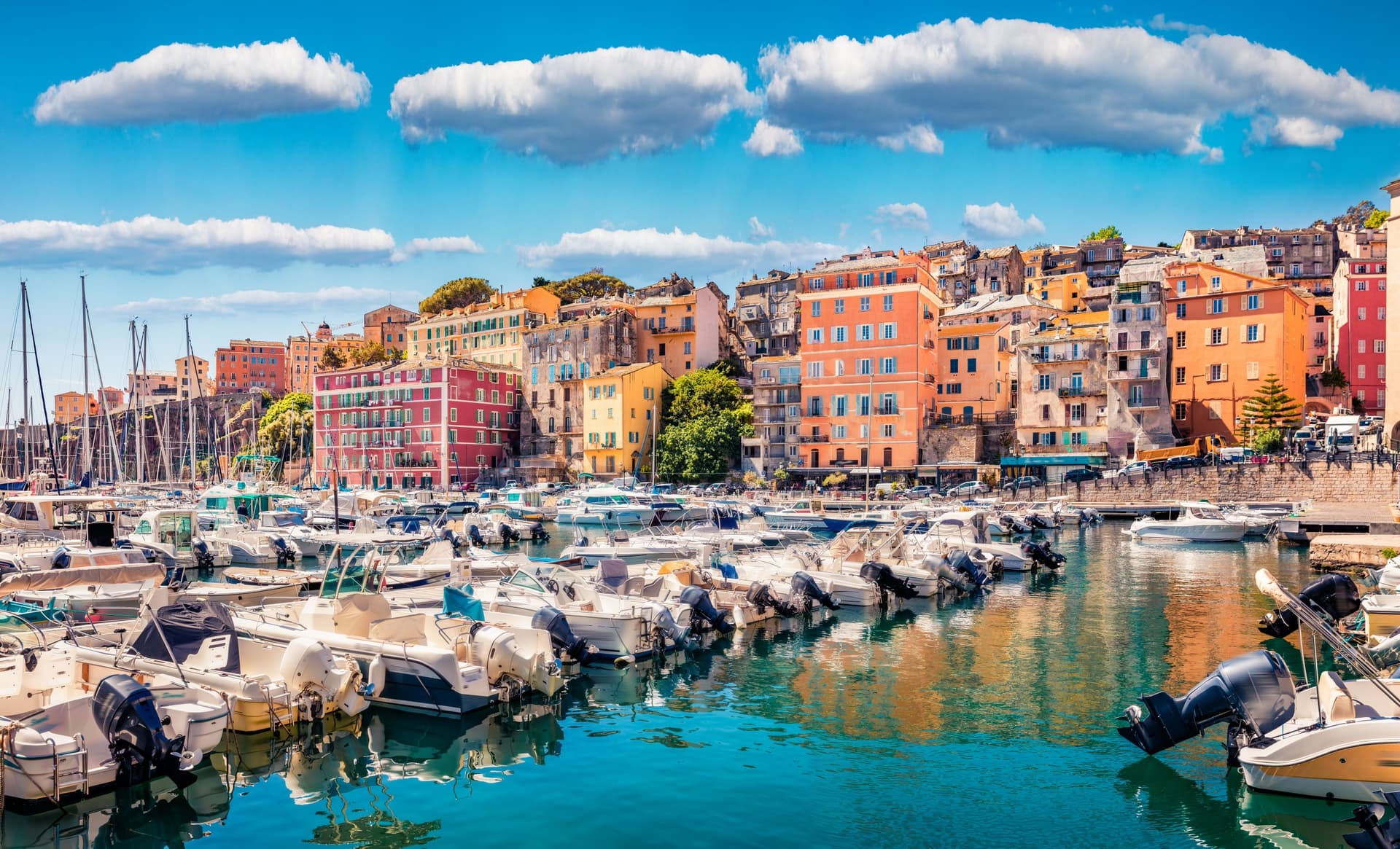
Begin discovering the city by strolling through its streets and neighborhoods. Place Saint-Nicolas is the first must-see to visit. Continue crossing Quay of the Martyrs to reach the Old Harbor, which is an invitation to relaxation. A coffee break at one of the local restaurants will allow you to admire pleasure boats along the quay and observe the return of fishing boats. For shopping enthusiasts, opt for Boulevard Paoli and rue César Campinchi. If these, parallel to Place Saint-Nicolas, are filled with major brand boutiques, Corsican product shops and pleasant tea rooms, rue Napoléon, meanwhile, is brimming with artisan shops, creators and decorators from Bastia.
Swimming at the Beach
Choose from beaches like Misincu, l'Arinella (accessible beach label), Lavasina, Sainte-Marie, etc. for seaside vacations in Bastia.
Hiking
Set out to discover Cap Corse by following the Customs Officers' Trail, which stretches 26 km. Corsica's most beautiful landscapes are found around Bastia. This uphill hike will take you to heights overlooking the wild plains and inlets of Cap Corse. There unfold the most beautiful shades of blue of the Mediterranean Sea mingling with natural green and the ochre color of the earth, drawing many "wows" from you, as the spectacle confirms Corsica's nickname, the "Island of Beauty."
Nightlife
The Toga leisure port and Galetta Square next to the Old Harbor are filled with bars and nightclubs.
Bastia Cuisine
An abundance of specialties from the sea and local produce fully reflects the image of the coastal city that is Bastia. When dining at a typical local restaurant, don't miss trying sardines with brocciu, an emblematic Corsican cheese, or denti fish, accompanied by a good wine, muscat or local spirit. Add a sweet touch to your gastronomic journey in Bastia by savoring panzarotti, sweet fritters, or fiadone, golden custard tart. Beyond restaurants and cafés, the market square brings together several local producers offering delicacies that will delight your palate.
When to Visit Bastia?
The best period falls between May and October, as temperatures are favorable for vacations, ranging from 19 to 30°C, and rainfall is low (28 to 73 mm). The rest of the year, weather conditions are somewhat less favorable, characterized by lower temperatures (9 to 18°C) and more rain (up to 92 mm).
If You're Coming from Outside Corsica
By plane. Bastia airport is one of Corsica's 4 airports. If you're departing from Paris, it will only take 1.5 hours to reach Bastia by plane. This option is undoubtedly the simplest and fastest way to reach this destination.
By ferry. The other option is ferry travel, allowing you to board with your vehicle. You can thus forgo car rental. One day or one night is enough for a sea journey from Marseille, Nice or Toulon. Here are a few ferry companies where you could make reservations: Direct Ferries if you're departing from Marseille or Nice, Corsica Ferries if you're traveling from Toulon.
If You're Already in Corsica
Since Bastia is the capital of Upper Corsica, it's easily accessible by road or rail.
Want to discover this destination?
Our local advisors design your tailor-made trip.