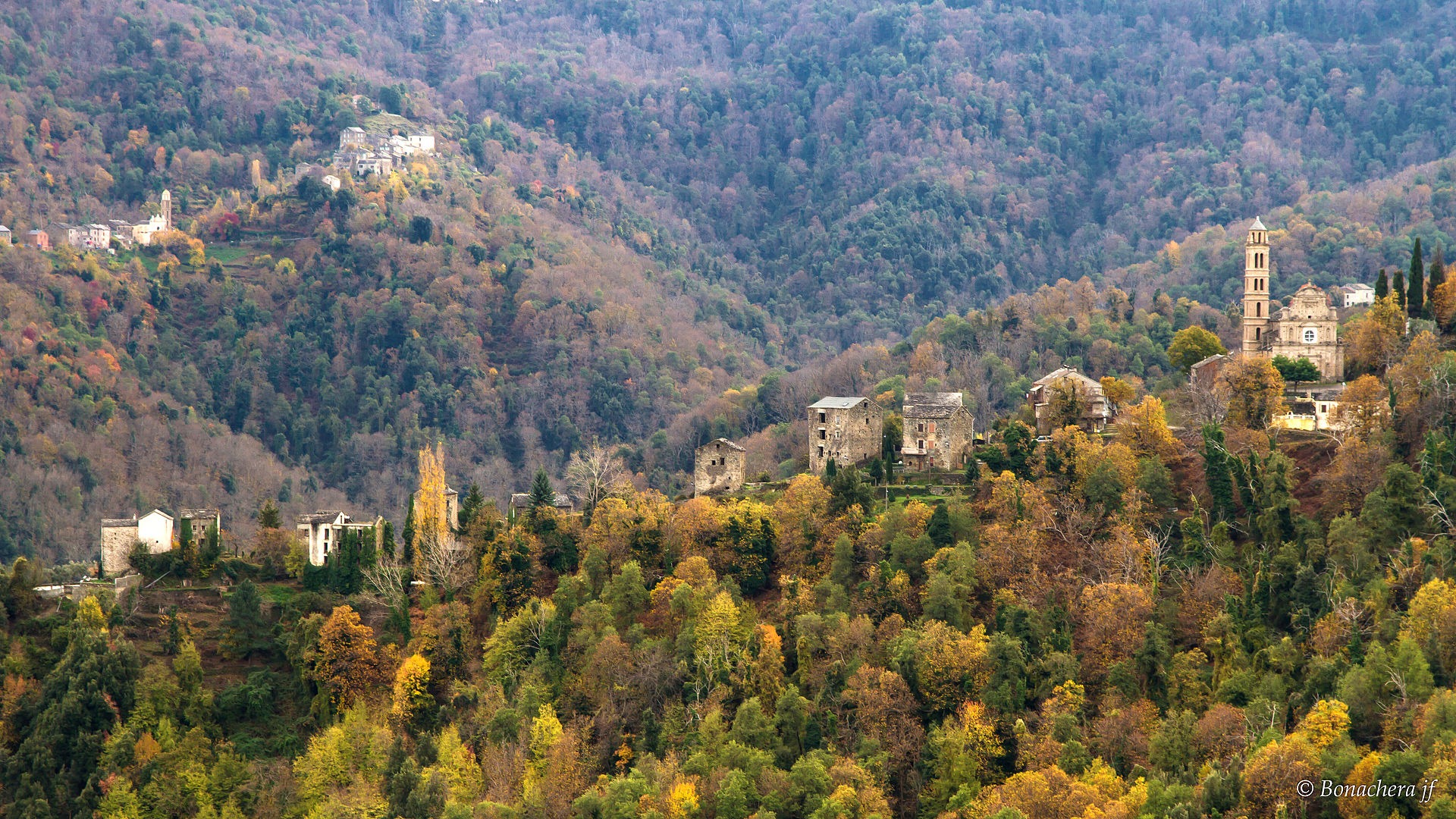
Cap Corse and Balagne
In the north of the island, the maritime peninsula of Cap Corse and the hilltop villages of Balagne offer a condensed landscape of Genoese heritage and living craftsmanship.
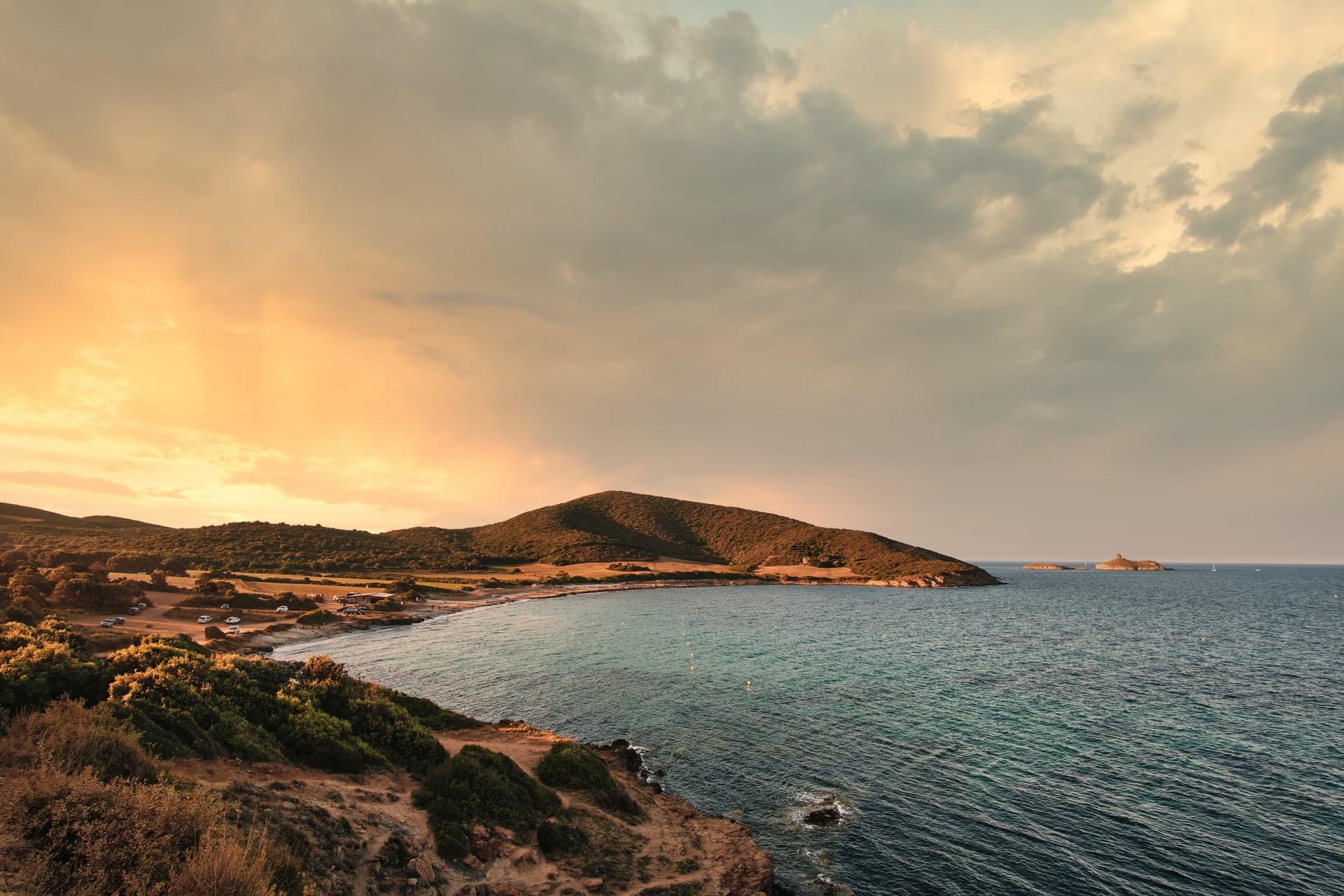
Cap Corse and Balagne occupy the northern third of the island, separated by the Gulf of Saint-Florent and the Agriates Desert. Two very different micro-regions that we often propose as a combined itinerary, because they can be covered in four hours of driving and they tell two Corsican stories: the austere maritime one of Cap fishermen, and the agricultural, sun-drenched one of Balagne's hilltop villages.
Cap Corse is a peninsula 40 kilometres long and roughly 12 kilometres wide, crossed by a scenic corniche road, the D80, which requires a full day to complete. On the western coast, Nonza clings to a green schist cliff that overlooks an 800-metre-long black slate beach, a legacy of the Canari asbestos mine that closed in 1965. Further north, Centuri remains an active fishing port, where around twenty boats still land red spiny lobster between March and September, served the same evening at the quayside restaurants. On the eastern side, Erbalunga, Macinaggio and Rogliano line up Genoese houses, watchtowers and Romanesque chapels. The interior lives off citron trees and muscat grapes from the Coronata estate and a few producers around Rogliano.
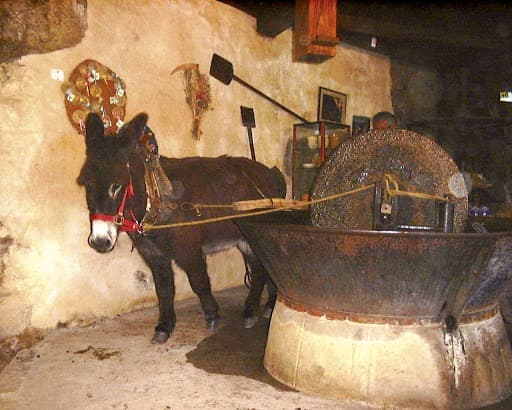
Heading south-west, you cross Saint-Florent and its gulf, then enter Balagne via the coastal road or the San Stefano pass. Balagne is an agricultural plain backed by a line of hilltop villages between 300 and 500 metres in altitude: Pigna, Sant'Antonino (one of the island's oldest villages, founded in the 9th century), Corbara, Aregno, Speloncato, Lumio. These villages today thrive largely on craftsmanship—music boxes from Pigna, luthiers, cutlery makers, sheep's cheese makers who age brocciu and casgiu merzu. The region also produces Oletta and Aregno AOP olive oil, and the vineyards of Calenzana have been climbing the quality ladder for the past fifteen years.
Calvi and L'Île-Rousse are the two gateways to Balagne. Calvi, dominated by its 15th-century Genoese citadel, retains the character of a small garrison town—the Foreign Legion still maintains its 2nd REP there. L'Île-Rousse, founded in 1758 by Pascal Paoli to rival Calvi while it was in Genoese hands, is more commercial, with its daily covered market and fine sandy beaches within a ten-minute walk of the centre. Between the two, the Balagne tramway, the Trinighellu, serves the creeks every 40 minutes in summer: a mode of transport we recommend for those wanting to avoid driving.
The climate is one of the mildest in Corse. Summer temperatures hover around 28 to 30°C during the day, tempered by the sea breeze or the libecciu, the south-westerly wind that sweeps across Balagne several days a week. Winters stay above 10°C on average, and it's possible to walk between villages from February onwards. Festivals punctuate the calendar: Festa di u Mare in Erbalunga in August, Calvi's polyphonic singing gatherings in early September (the Polyphonic Meetings founded in 1989), the olive fair in Montegrosso in July.
Travellers who come here generally seek a balance between sea, villages and heritage, without the tourist density of the far south. It's also the region best suited to a mixed stay: beach mornings, village afternoons, evening concerts or markets.
Highlights
Nonza's black beach. 800 metres of crushed slate at the foot of a green schist cliff, a remnant of the Canari asbestos mine. You descend via a 15-minute path from the village.
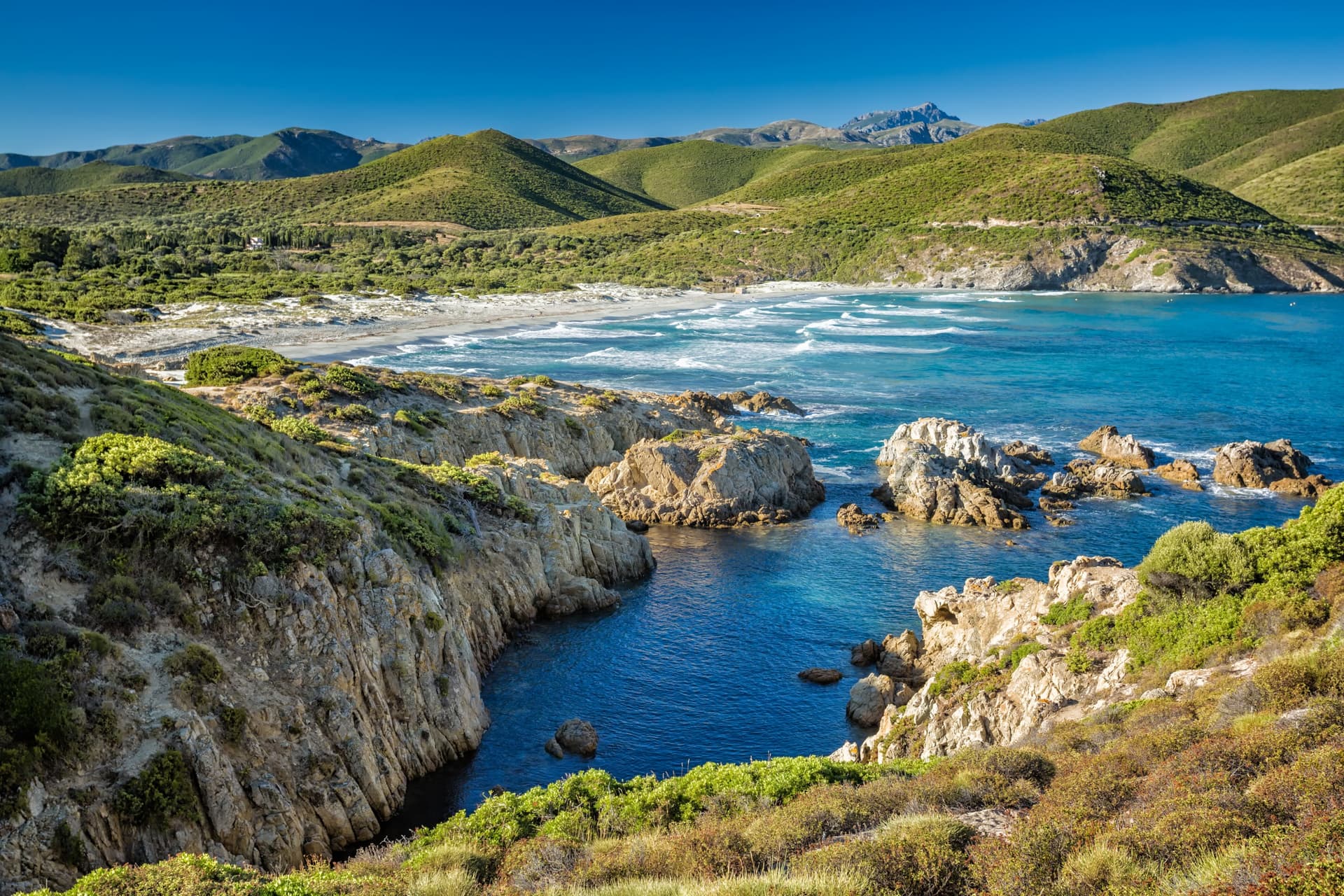
Agriates Desert by water shuttle. Departing from Saint-Florent towards Saleccia and Lotu beaches, accessible only by boat or 4x4 track. White sand, crystal-clear water, no development along 35 km of coast protected by the Coastal Conservation Trust.
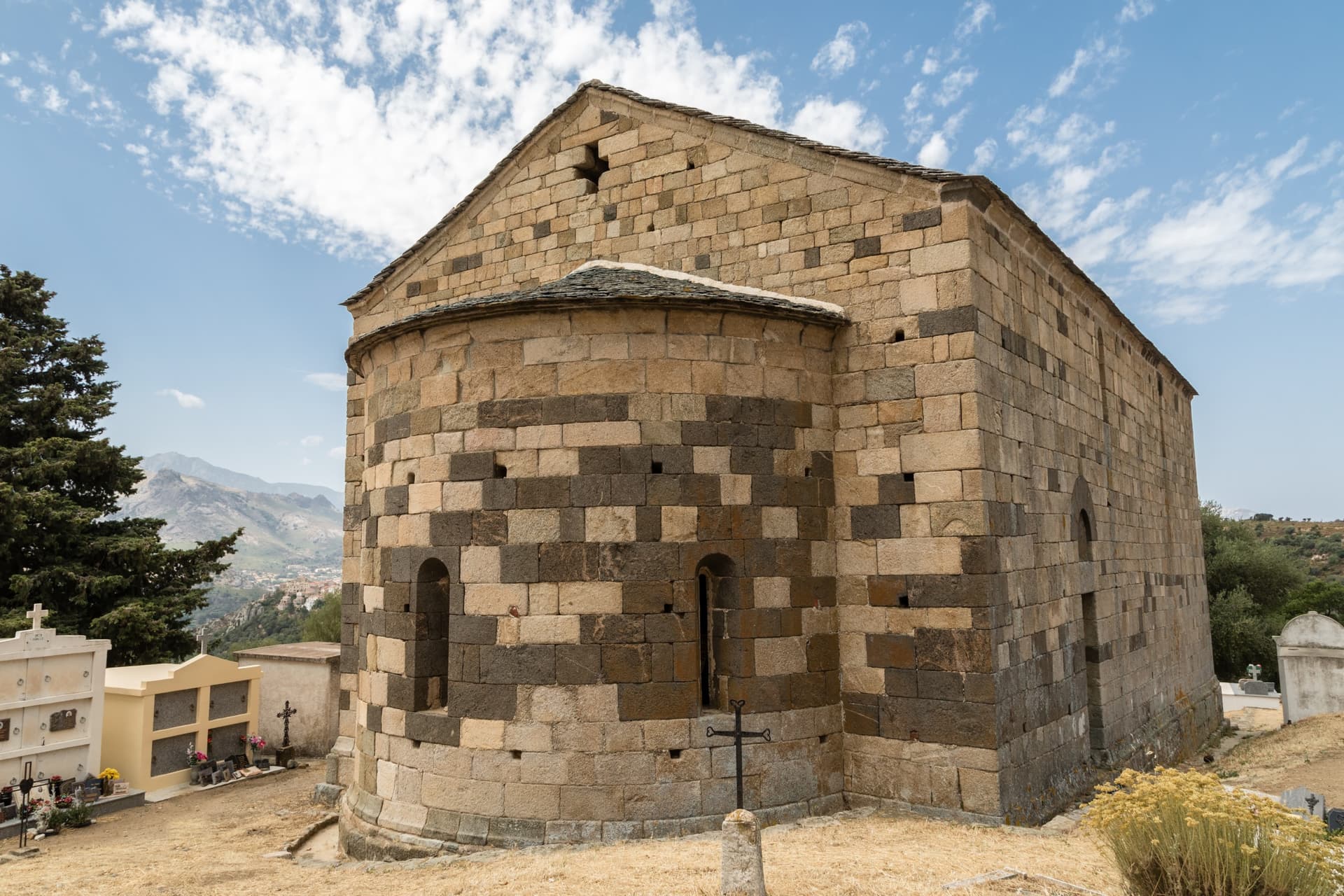
Tour of Balagne's craft villages. Pigna, Sant'Antonino, Corbara, Aregno—a full-day loop. Luthiers' workshops, music box factory, cheese makers and Aregno's Pisan chapel (12th century) with polychrome façade.
Centuri fishing port. Around twenty boats still practising red spiny lobster fishing from March to September. Four quayside restaurants serve the catch of the day from 7pm onwards.
Calvi's citadel at dusk. Built by the Genoese in the 15th century on a pink granite headland. Climb through the gateway, views over the bay and, on clear days, the Maritime Alps 170 km away.
When to visit
We recommend the period from May to mid-June and mid-September to mid-October. Temperatures then range between 20 and 26°C, the sea stays around 21-23°C into October, and the villages return to their normal rhythm. July and August are hot (28 to 32°C), with heavy footfall on Calvi, L'Île-Rousse and Saleccia beaches, and accommodation prices doubling. April and late October suit hikers: 16 to 20°C during the day, cool sea, Cap trails passable.
Months to avoid for a beach holiday run from mid-November to March: the sea drops to 13-14°C, several hotels close, and the libecciu can blow at 80 km/h for several days on end. Conversely, it's a good period for those wanting to discover the interior, Patrimonio's wine cellars and off-season villages, with temperatures staying around 12 to 15°C during the day on the coast.
Practical advice
We recommend a minimum of 5 days for Cap Corse and Balagne combined: 2 days for a tour of the Cap from Bastia or Saint-Florent, 3 days for Balagne based in Calvi or L'Île-Rousse. The two arrival airports are Bastia-Poretta (for the Cap) and Calvi-Sainte-Catherine (for Balagne), linked by a 90 km coastal road that we cover in 1 hour 45 minutes. The Bastia-Calvi train line via Ponte Leccia is a picturesque but slow alternative (4 hours).
The region combines naturally with the mountainous centre, 1 hour 30 minutes from Calvi via the Asco Gorges, for a sea-mountain contrast over 8 to 10 days. Combining with the West Coast and Ajaccio requires a day's drive via Porto and the Piana Calanques. Comfort levels are high on the coast (4-star hotels, characterful guesthouses in hilltop villages) and simpler in the Cap, where we favour rooms in locals' homes in Centuri or Rogliano. The destination suits couples, families with children from age 6 upwards, and walkers keen to tackle the Cap's coastal trails (Douaniers Path, 19 km from Macinaggio to Centuri) and Balagne villages.